Common Ground Makeathon · Design × Tech · 11 Oct 2026

The Commons

a room that builds itself

The idea

Scan a QR. Add one thing to the room.Codex makes it real while you watch — credited to you.
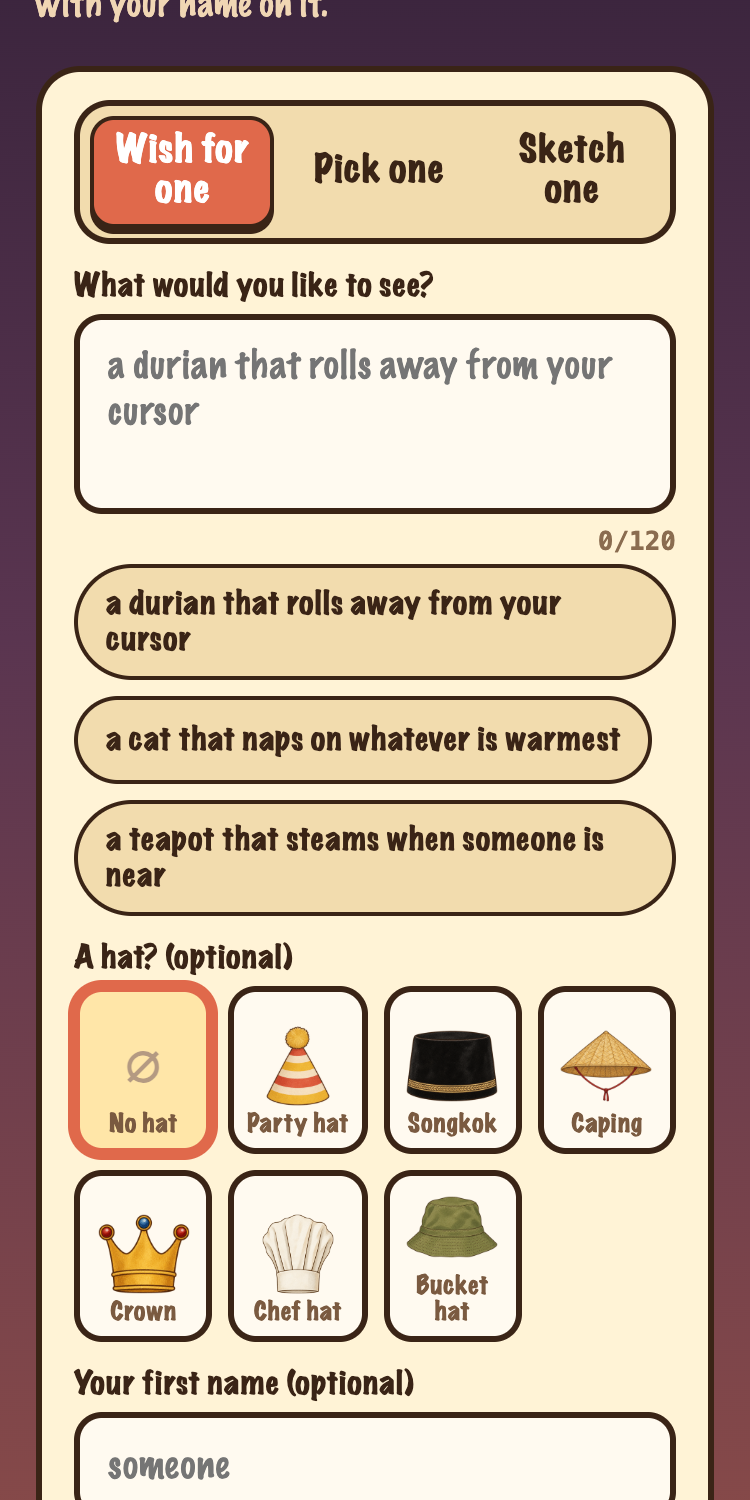
1 Wish for one

Codex writes it. Code, then art.
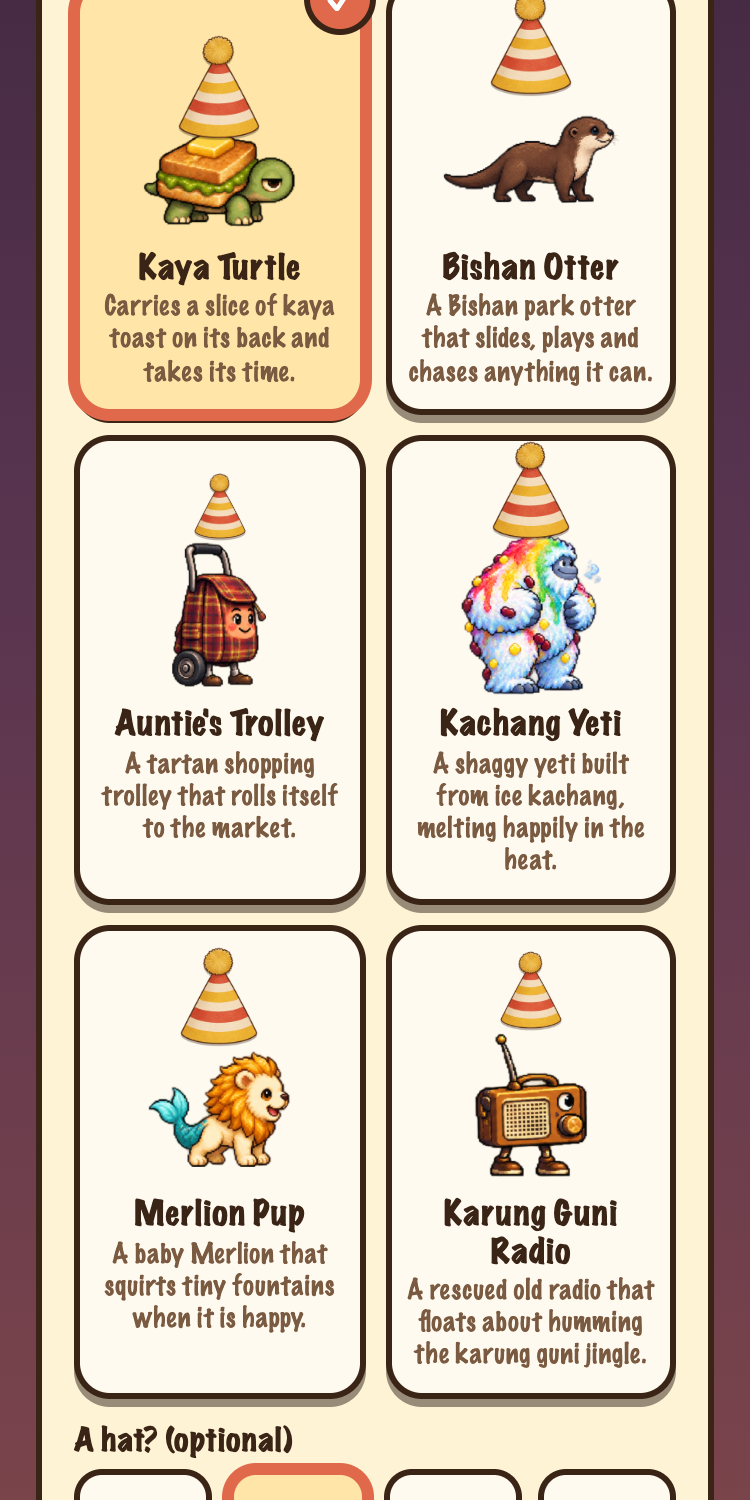
2 Pick one

6 presets + 6 hats. Instant.
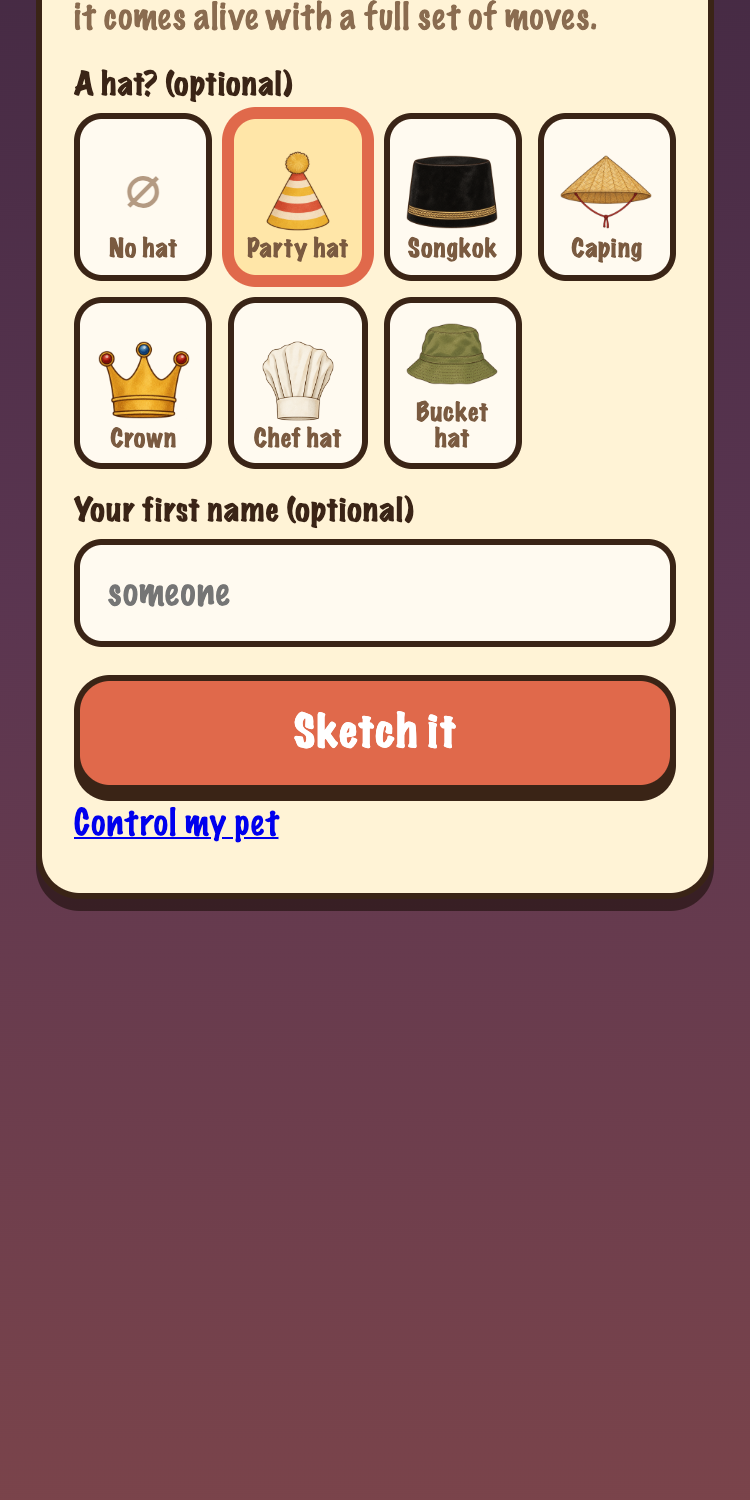
3 Sketch one

gpt-6-luna draws it.

Live demo

Scan → wish → watch it walk in
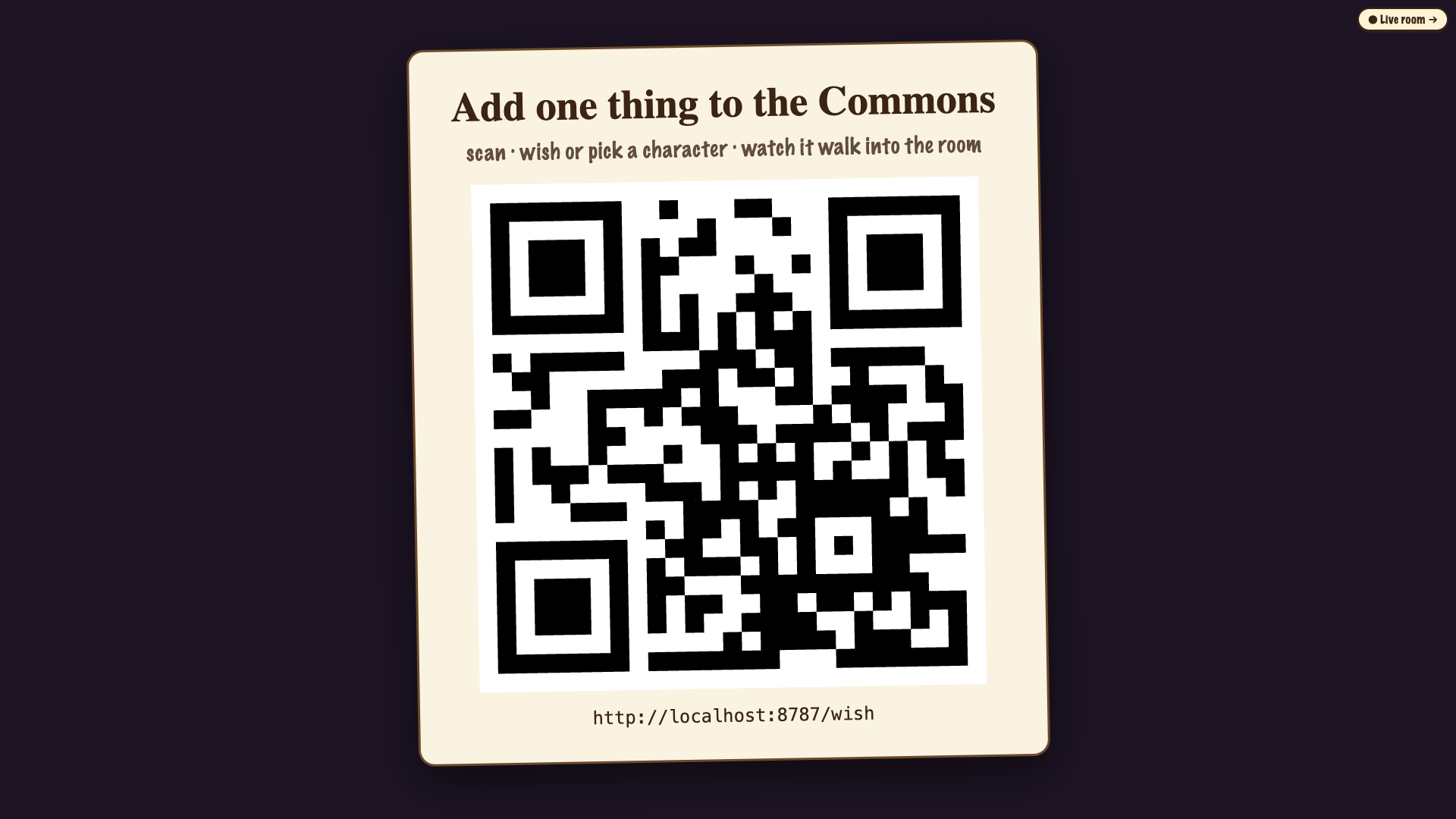
1. scan
→
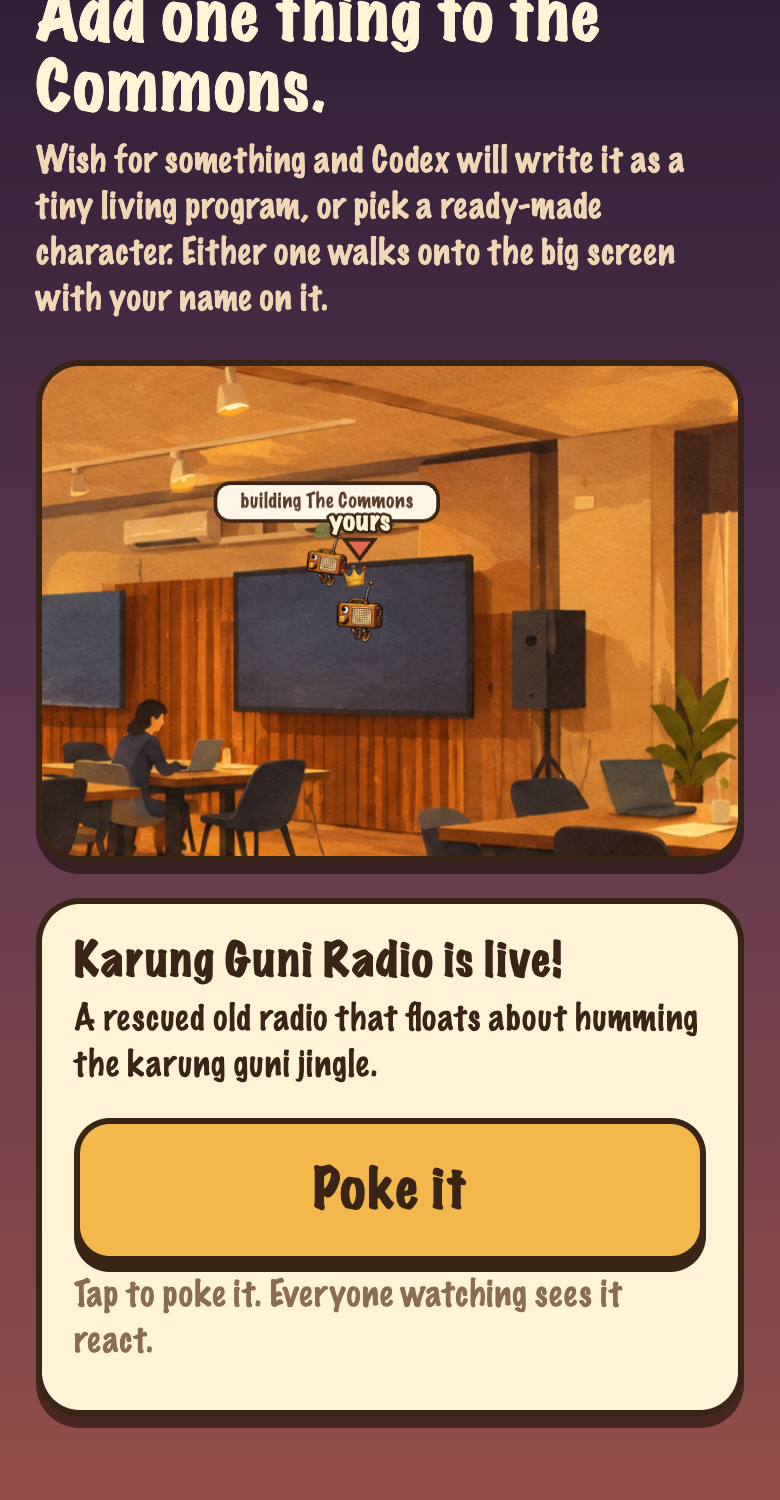
2. wish · status on phone
→
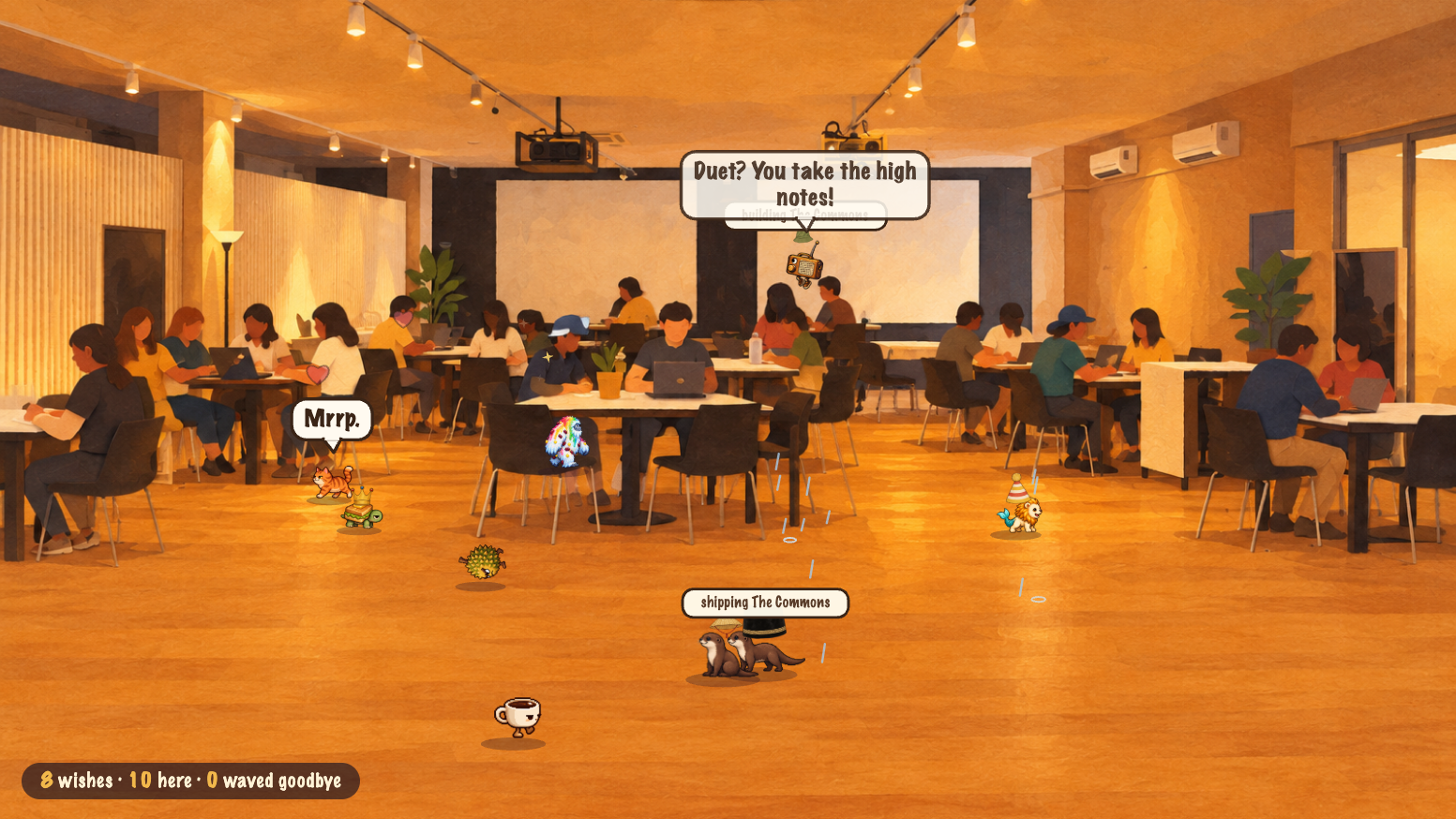
3. it lands in the projected room · live in ~65 s

No app, no account. Everyone in the room is looking at the same screen — and the creature on it has their name on it.

Behind the scenes

The Codex loop

Phone → POST /api/wish
↓
Screening · local Codex, gpt-6.1-sol ~7 sstructured output: allowed · thingSummary · spritePrompt · bleed
↓
Queue · concurrency 3 · flood guard 40
↓
Codex SDK thread · gpt-6.1-sol · low effortworkspace-write sandbox · no network · writes thing.js  ~30 s
↓ runs check-thing.mjs   ↑ reads errors, fixes
Server re-check (authoritative) · one follow-up turn max
↓
LIVE · sprite sheet drawn in parallel (gpt-6-luna)
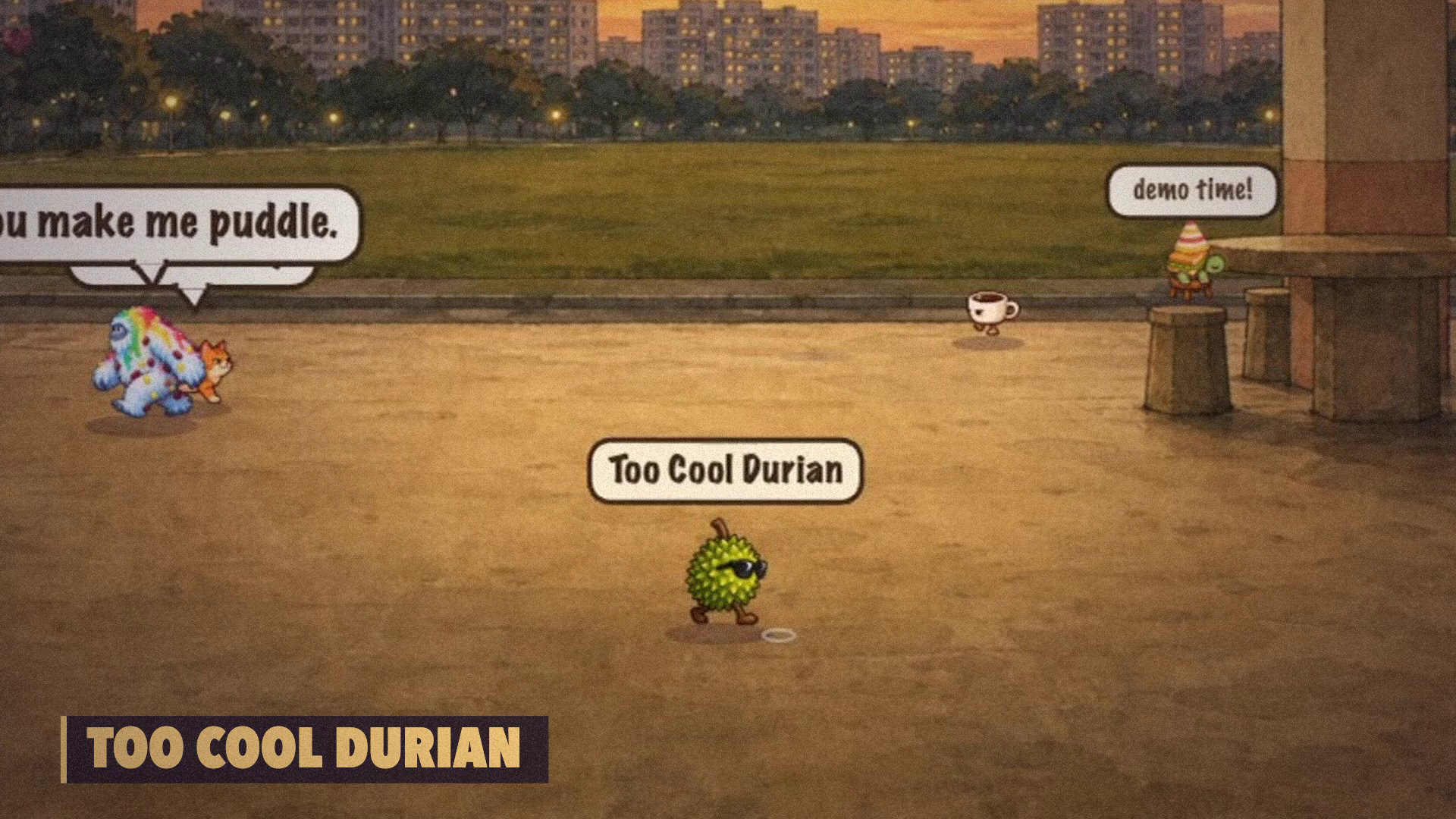
  codex workbench · wish #11 · "a durian in sunglasses"
checking the wish…
accepted: A durian wearing sunglasses bobs confidently and gives a cheeky little wiggle.
drawing it
Codex is writing it
wrote thing.js (91 lines)
check → passed
server re-check → passed
code passed in 33.4s
sprite ready
LIVE: Too Cool Durian (built by Codex in 33s)
real log lines from the workbench rail
Behind the scenes

The thing contractCodex writes only behaviour. One file, 6 KB max, no imports.

export default {
  name: "Too Cool Durian", tags: ["food","spiky"],
  zone: "ground", size: 1,
  update(me, world, dt) {
    if (world.steer(me, {x: s.tx, y: s.ty}, 85) < 18) {
      // wander in depth, not just left-right
    }
    const spots = world.spots().filter(q => !q.occupant);
    if (world.goTo(me, s.spot, 100)) me.say("VIP.");
  },
  onMeet(me, world, other) {
    me.signal("cool", other.id);
    world.fx("sparkle", me.x, /* head */);
  },
  onPoke(me, world) { me.vz = 450; me.say("Designer spikes."); }
};
world APIsteer · goTo / leave · nearby / nearest · onMeet · onSignal / me.signal · fx · seeded random()
Reads world.scene: floor trapezoid, air band, spots (seat / table / rest / perch). No hard-coded coordinates — the room can change.
forbiddenimport · require · fetch · eval · Function · window · document · Math.random · setTimeout · process · async/await · while(true)
Quality bar: move in depth · use a spot · react to neighbours
Behind the scenes

Codex fixes its own bugstools/check-thing.mjs — the same script runs in Codex's sandbox and again on the server

1 · Static ban listforbidden identifiers, 6 KB cap, shape (name, tags, zone, size, update)
2 · node:vm simulation3600 ticks (60 s of room time) · stub world · dummy neighbours wander close · signals + pokes injected · 50 ms timeout per call · code generation disabled
3 · Assertsevery me.x / y / vx / vy / angle / scale stays a finite number · state is plain JSON · target args valid
4 · Verdictwarnings for flat movement, no spot used, ignores neighbours
  node check-thing.mjs .
// Codex reads this, edits thing.js, re-runs
{
"ok": false,
"errors": [
"me.vy is NaN after update",
"banned identifier: Math.random"
]
}
…fix…
{"ok": true, "errors": []}
shape of the output: {ok, errors[], warnings[]} · illustrative example errors

Fails twice? Nothing goes live. Only passing code reaches the room.

Behind the scenes

Codex draws tooone unified action map: every character, one 4×3 sheet
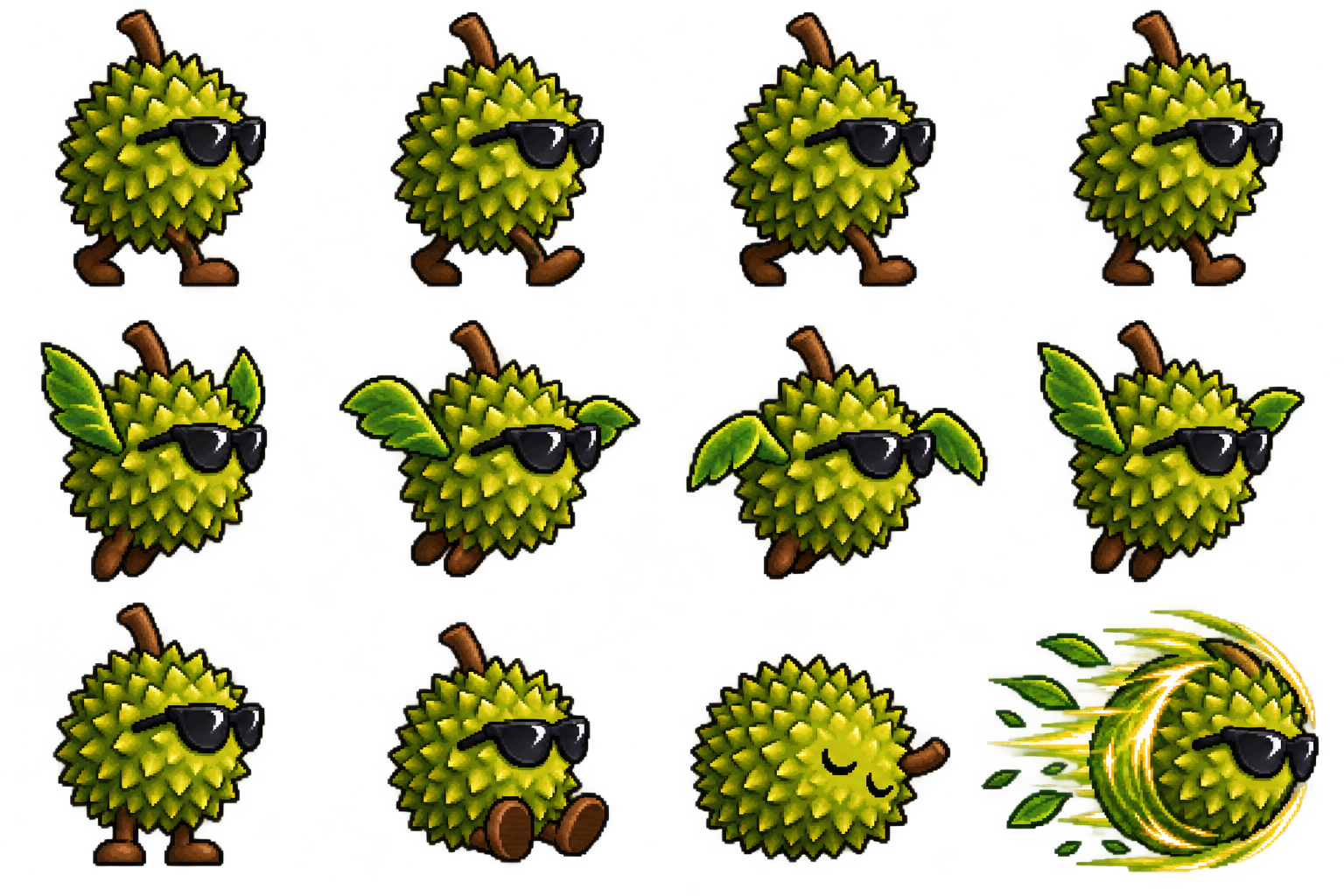
the real sheet, drawn by gpt-6-luna via Codex · 1536×1024
cells 1–4 walk
cells 5–8 fly
cell 9 idle   10 sit   11 sleep   12 special
slice-sheet → frames.png + anim.json{frameW, frameH, count: 12, anims: {walk, fly, idle, sit, sleep, action}}
The engine picks the frame from the thing's motion — no per-character art code.

Behind the scenes

Point a phone at any roomphoto → gpt-image redraw (~17 s) → Codex vision maps it (~15 s) → sliders → live
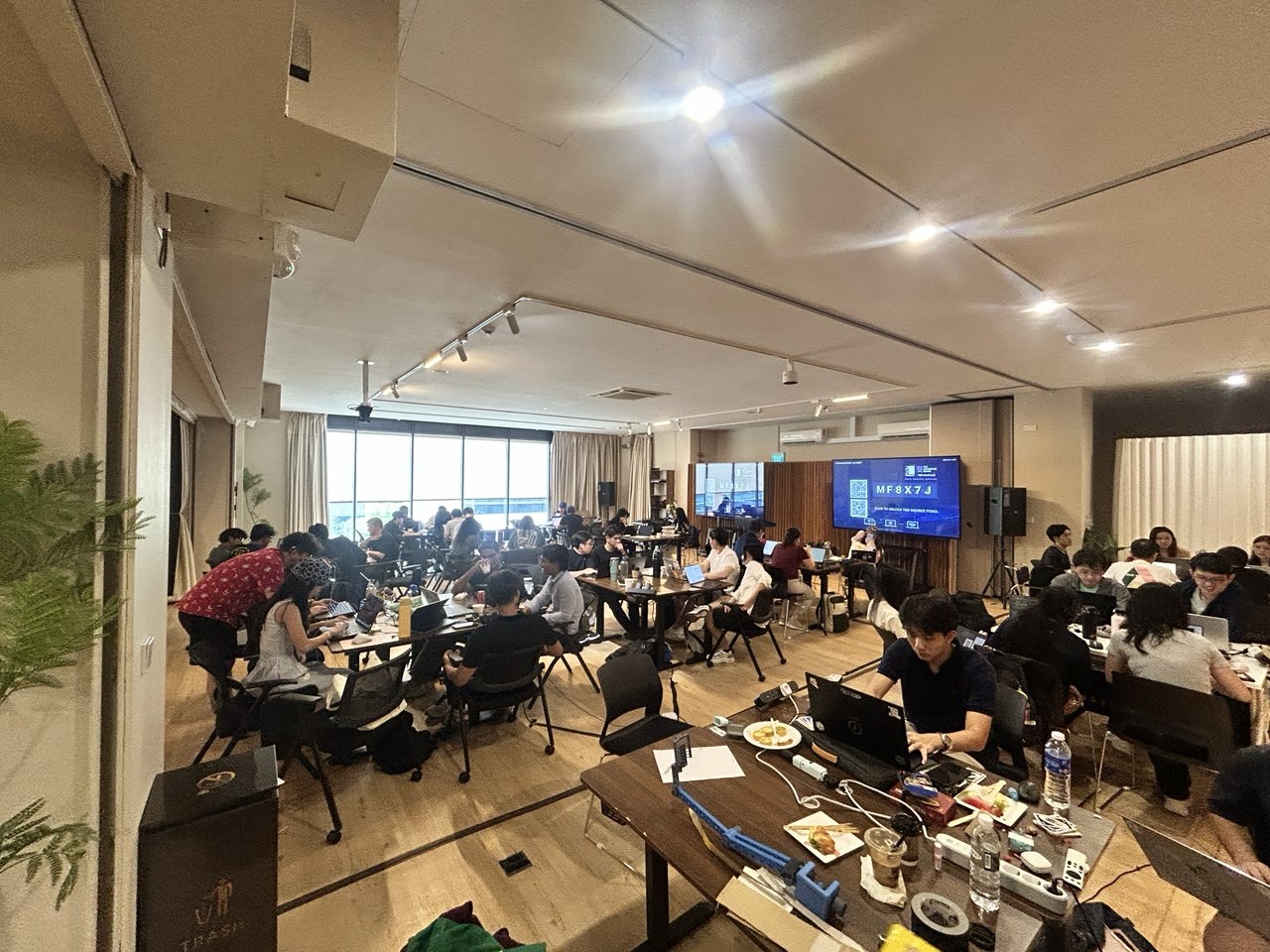
1. the real venue photo
→
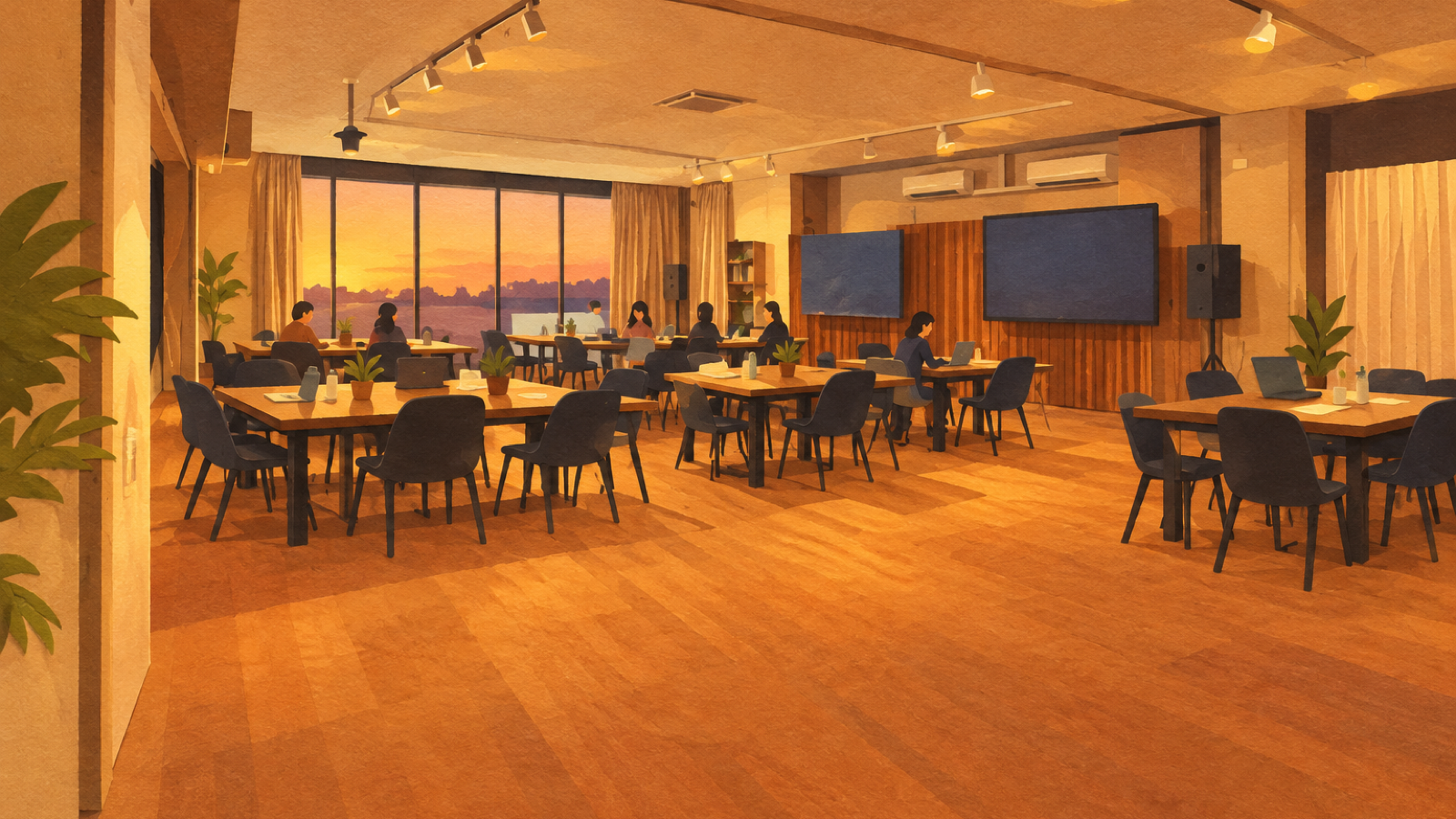
2. paper-style redraw
→
Codex vision, outputSchemafloor trapezoid · air band · ceiling
depthScale · up to 10 spots
(seat / table / rest / perch)
3. host nudges sliders → Use this room

Creatures re-clamp to the new floor with a hop. The only OpenAI API call in the whole system is this image edit.

Behind the scenes

The engine

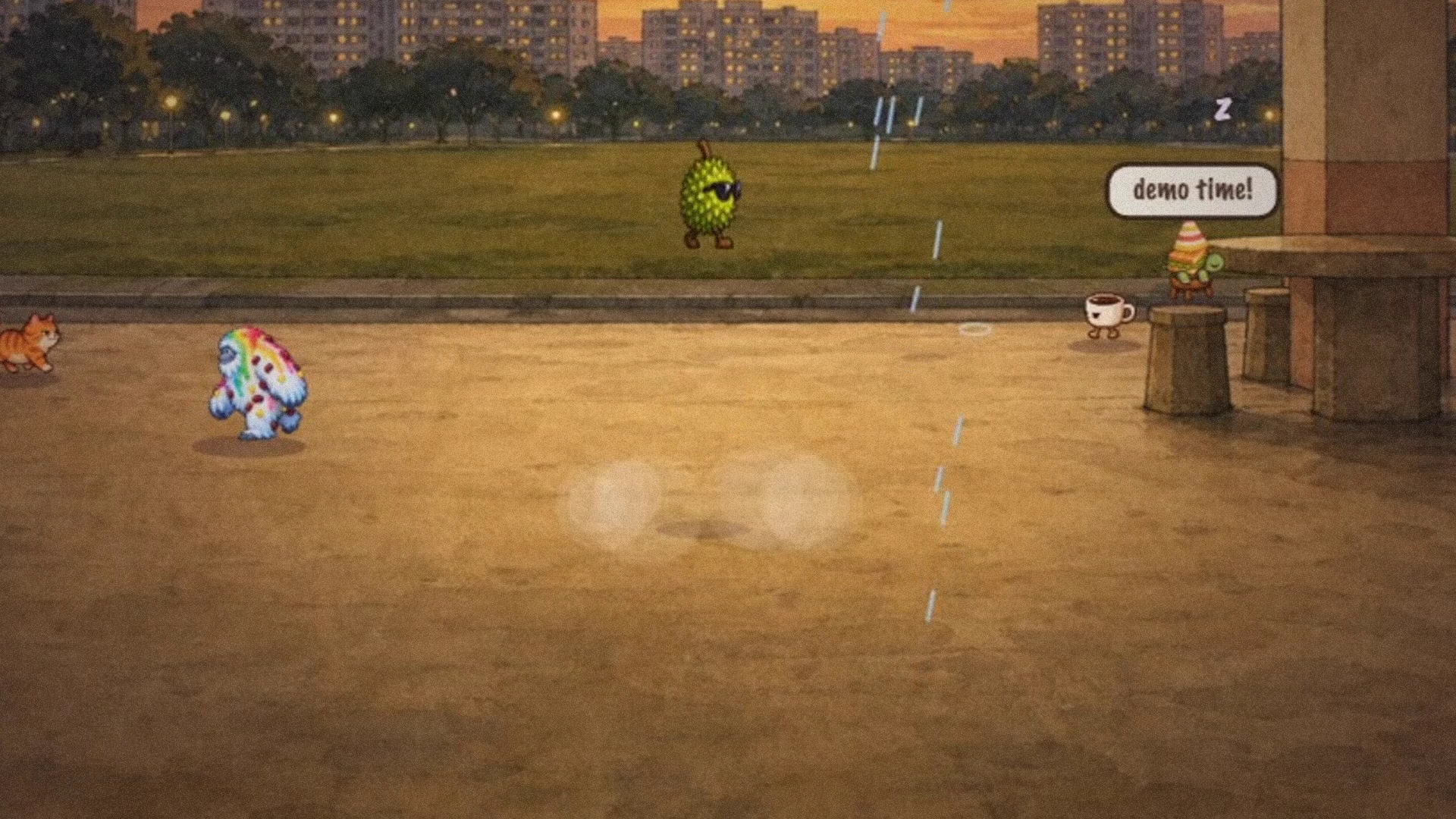
  • Depth floor. Feet stay in the trapezoid; nearer = bigger.
  • Spots. Stools, tables, rests, lamps: goTo pins you there.
  • Neighbours. Tags, onMeet, signal — they react to each other.
  • Hats · moods (sleep, moody) · status + 3-digit PIN.
  • Rooms grow. A new room opens at 10 characters.
  • Quarantine. A thing that throws goes "resting…", the show goes on.
real room, real creatures
Behind the scenes

Architecture: one Node process

server/ plain httpREST + SSE, with 2 s polling fallback for tunnels that buffer
Persistencemanifest.json + per-thing folders (thing.js, frames.png, anim.json)
Phones → cloudflared quick tunnel → localhost:8787projector on localhost
Local Codex CLI on a ChatGPT loginscreening · thing.js · sprite sheets · room mapping via @openai/codex-sdk
gpt-6.1-sol (low effort) for text + code
gpt-6-luna for images
OpenAI API key: only the room-photo redrawkept out of Codex's environment

Honest note: the app was written with Claude Code agents. Codex is the runtime engine.

Best Use of Codex

Codex is the runtime

Live, in front of the audience.
Remove Codex and nothing exists.

Scan & add one thing

The Commons

Wish it. Watch it walk in.

Thank you.

join QR
scan · wish · watch